Stop Buying the Panic: A Practical, Less-FOMO Take on AI
AI is useful. The panic around it is also manufactured. A calmer way to learn, use, and stay responsible for the work.
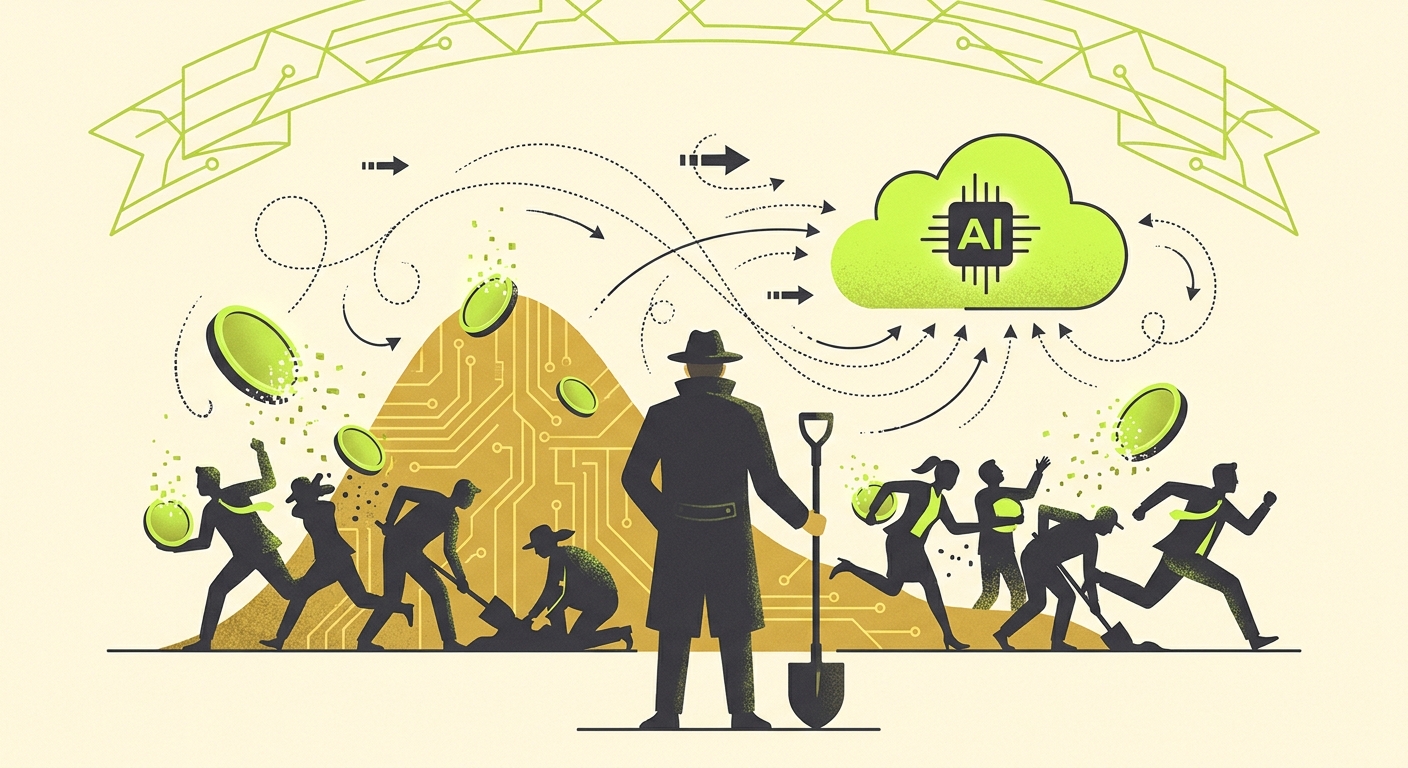
In a gold rush, sell shovels - the modern version sells you the fear of missing the gold.
In a gold rush, the people who got rich rarely struck gold. They sold shovels to everyone who believed the next bend in the river held a fortune.
The modern version is quieter and far more effective. The shovel sellers don't just sell you the shovel anymore. They sell you the feeling that everyone else already found gold, and that you're one day away from missing it forever.
That feeling has a name: FOMO. And right now it might be the most valuable raw material in the AI industry - in some ways more valuable than the models themselves.
I want to make the case for stepping off that treadmill. Not because AI is overhyped junk. It isn't. But because the panic around it is largely manufactured, and panic is a terrible state to make decisions in.
AI is genuinely useful - that's not the argument
Let me be clear up front: I use AI every day and it has earned its place. It drafts, it summarizes, it unblocks me when I'm staring at an empty page, it turns a vague idea into something I can react to. The usefulness is real and it's growing. None of what follows is a "this is all a bubble" take.
My problem isn't the tools. It's the emotional weather report that gets attached to them - the constant low-grade signal that you're already behind, that the ground is shifting under you faster than you can stand up, that if you blink you'll be obsolete by Thursday.
The fear comes in two flavors
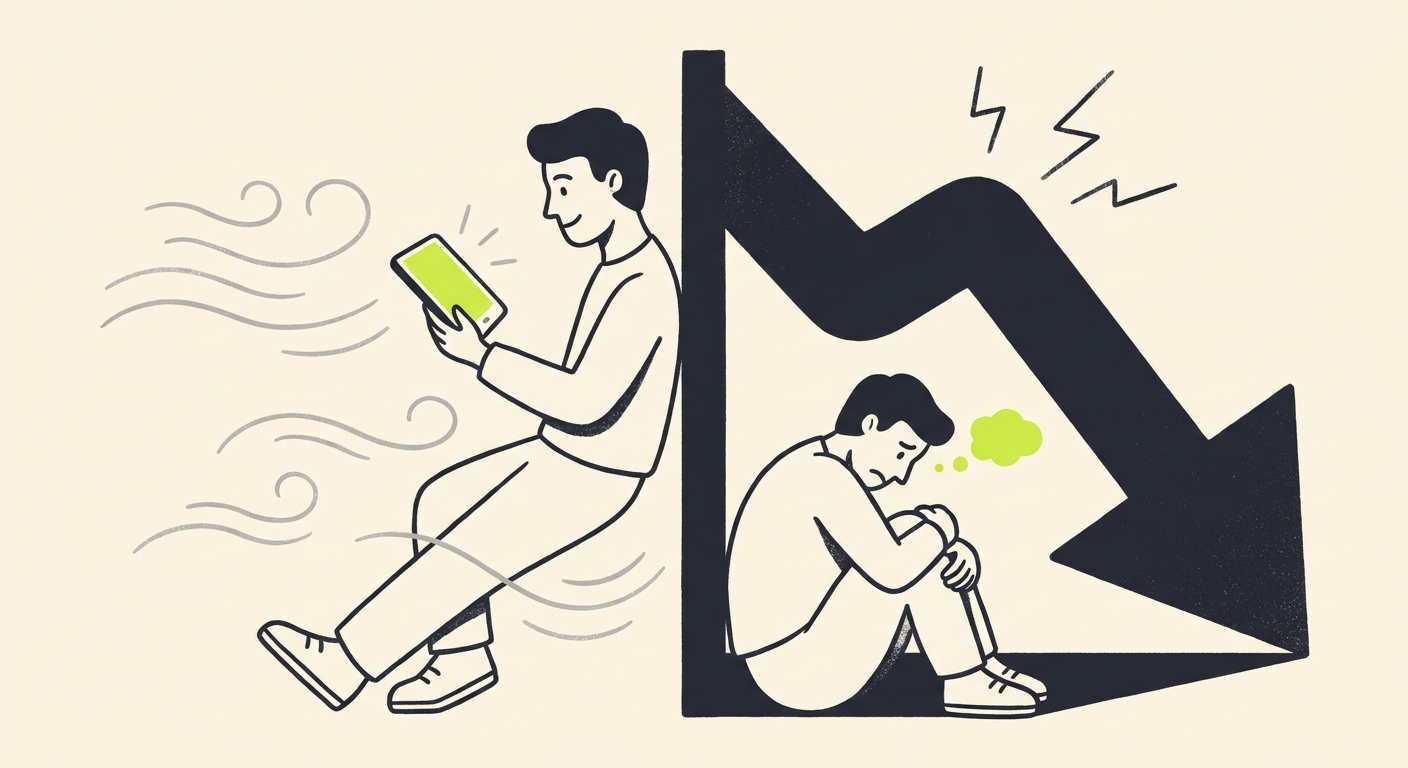
It helps to separate the two engines running here, because they are not the same thing.
The first is ordinary FOMO, and it's mostly harmless. AI companies make money when you use more, so they have every reason to make the newest model feel essential and the previous one feel like a flip phone. That's standard marketing. Sneaker brands do it, car brands do it, phone brands do it. I don't lose sleep over a product trying to sell me more product. The incentive is obvious, the tactic is old, and a healthy adult can shrug it off.
The second engine is the one I have a problem with: the fear of losing your job. When the message quietly shifts from "you'll fall behind" to "you'll be replaced," the stressor changes category entirely. It stops being about a purchase and starts being about your livelihood, your identity, your ability to pay rent. That's not a marketing nudge. That's a permanent background hum of dread.
And here's the uncomfortable part: the same companies selling the shovels also benefit from that dread. Fear of replacement is a fantastic urgency machine. It pushes individuals to buy subscriptions "just to keep up" and pushes companies to adopt fast and adopt scared.
I'm not claiming a smoky-room conspiracy, and I don't need to. The incentives line up on their own. When fear reliably drives usage, you don't have to coordinate a plot to benefit from fear - you just have to not discourage it. That's incentive, not malice. But the effect on the rest of us is the same either way.
There's a deeper asymmetry underneath all this. The company that builds the tool always holds the better seat. They decide how it's trained, what it nudges you toward, which defaults feel natural, and which behaviors quietly get rewarded. You're renting something whose incentives were set by someone whose first priority is their own growth, not yours. That doesn't make the tool useless - but it does mean the thing in your hands was shaped to suit its maker first and you second. Worth keeping in mind before you treat its every suggestion as neutral.
I got caught in the loop too
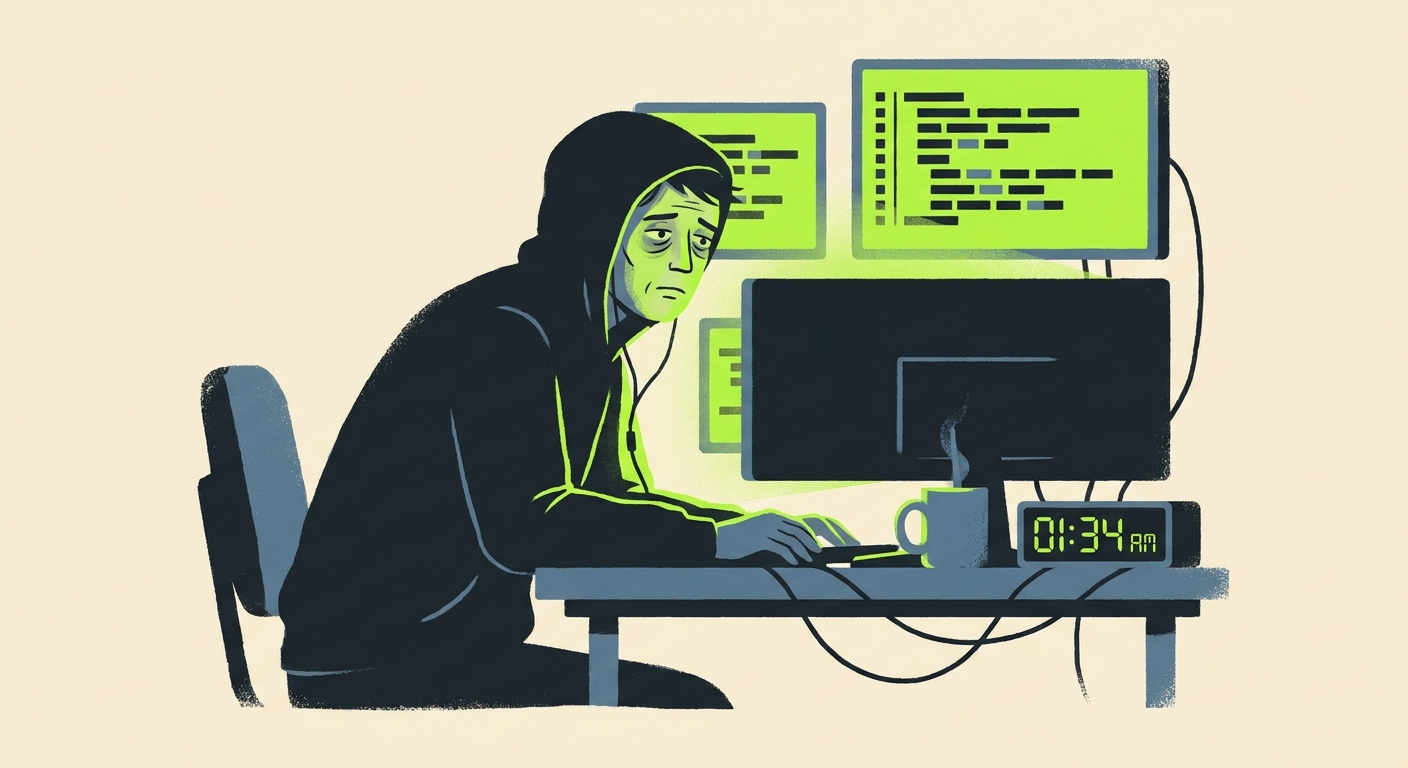
I'm not writing this from some calm mountaintop. A while back, when the AI marketing really started roaring and every other post promised that AI was about to mint a new class of millionaires, I got pulled straight into the current.
I went deep. I was coding with Antigravity, Windsurf, Codex - bouncing between them late into the night, chasing the feeling that if I just pushed a little harder I'd unlock the thing everyone else seemed to be unlocking. One more prompt. One more tool. One more session that bled past midnight.
Did I learn a lot? Honestly, yes. I came out of it knowing how to actually manage these tools - what they're good at, where they fall apart, how to drive them instead of being dragged by them. That knowledge is real and I don't regret having it.
But I paid for it in a currency that never shows up on a productivity dashboard. My sleep went first. Then my stress levels. The work felt exciting right up until it didn't, and the line between "engaged" and "wired and exhausted" turned out to be a lot thinner than I'd told myself. I was learning fast and running my health down at the same speed.
That's the part the marketing leaves out. The skills were worth it. The way I went about getting them wasn't.
Why a fear diet is bad for you
Fear is a lousy operating system for decisions, and it shows up in predictable ways.
You churn through tools instead of getting good at any of them. You chase every release instead of going deep on the few that actually move your work. You adopt things shallowly because adopting something feels safer than thinking. And underneath all of it, you carry a stress tax that doesn't make you more capable - it just makes you more tired.
The irony is that anxious people are worse at using AI well, not better. Real leverage comes from calm, deliberate practice: understanding what a tool is good at, where it lies to you, and how to fold it into your actual workflow. None of that happens when you're sprinting from a threat.
My approach: a power tool, not a prophecy
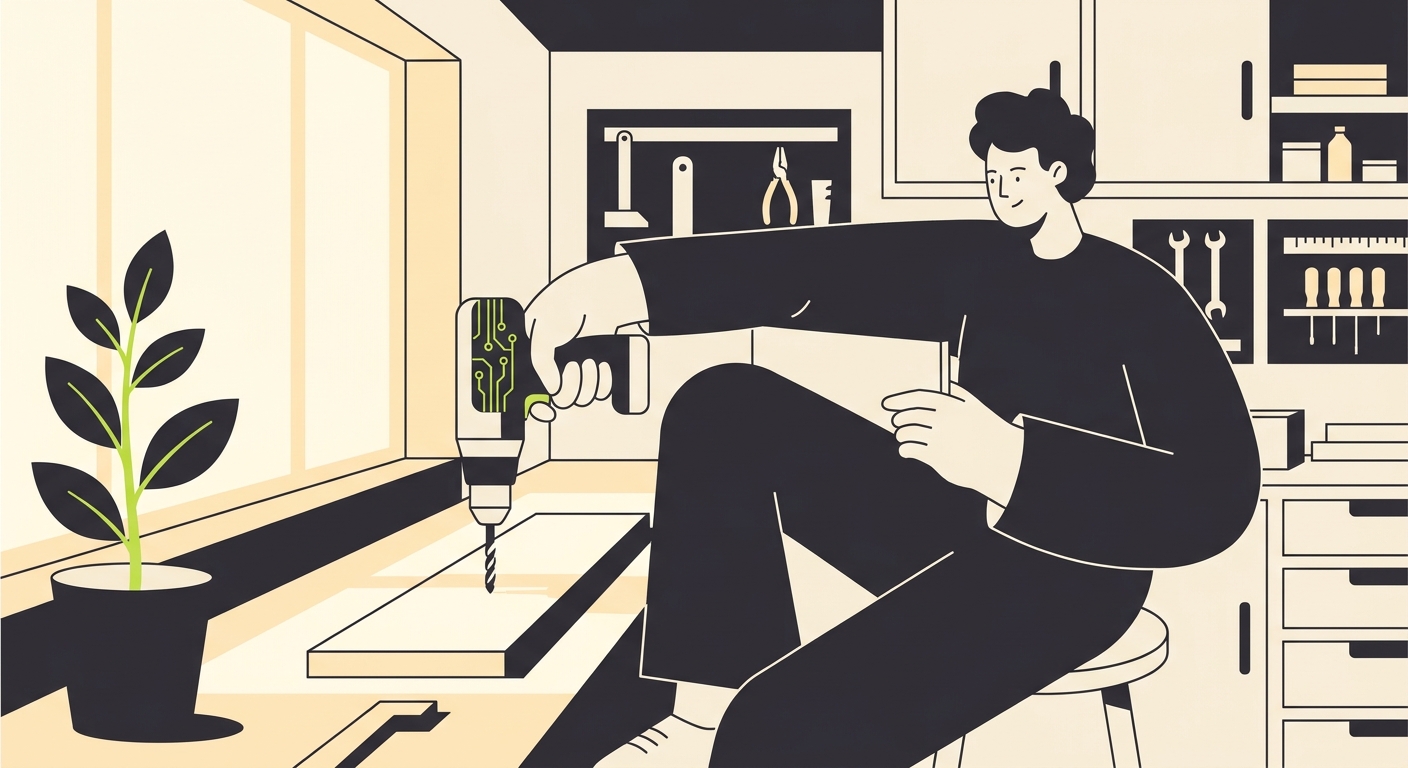
Here's how I actually relate to AI day to day. It's deliberately boring, and that's the point.
- Treat it as a tool, not an oracle. A drill is fantastic for making holes and useless at deciding where the holes should go. AI is the same. I bring the judgment; it brings the speed.
- Go deep on a few tools, not wide on all of them. I'd rather know two tools cold than have shallow opinions about twenty. Most "new" launches are variations on things I already use.
- Measure usefulness, not novelty. The question is never "is this the latest?" It's "did this save me real time or make the output genuinely better?" If not, it goes.
- Keep a human in the loop on anything that matters. For judgment calls, taste, and final decisions, the model is an advisor, not the author. I read every output like a skeptical editor.
- Protect your attention from the hype cycle. I don't need to read every "this changes everything" thread. Most of them don't. The signal survives a week; the noise doesn't.
- Skill up calmly, not frantically. Learning AI well is a steady habit, like getting fit. The people panicking about being replaced are usually the ones who never sat down and actually learned the tool.
A calmer relationship with AI
My honest belief is that the people who'll do best with AI aren't the ones who are most afraid of it. They're the ones who are curious, patient, and a little skeptical of anyone trying to rush them.
If I could send one message back to the version of me bouncing between Antigravity and Codex tabs at one in the morning, it would be simple: the skills will still be there next month. Your sleep won't wait around that patiently. You can learn all of this calmly - and you'll actually learn it better that way.
So this is the approach I'm committing to writing about more: less doom, fewer breathless predictions, more practical "here's a thing that actually worked." AI is a genuinely good tool going through a genuinely loud sales pitch. You're allowed to find it useful without finding it terrifying.
And one thing worth saying plainly, because the hype keeps blurring it: you are responsible for the code, not the AI. The model doesn't ship it, doesn't own it, and never answers for it. AI is a statistical tool - a very capable autocomplete with a talent for sounding certain. It predicts the next likely token; you make the call. When something it wrote breaks in production, "the AI did it" isn't a defense, because there's nobody on the other end of that sentence. There's just you and the choices you signed off on.
Don't buy the panic. Buy the shovel if you want it - just don't let anyone convince you the river is about to dry up.